
How Kubernetes Is Reshaping Cloud Hosting Deployments?
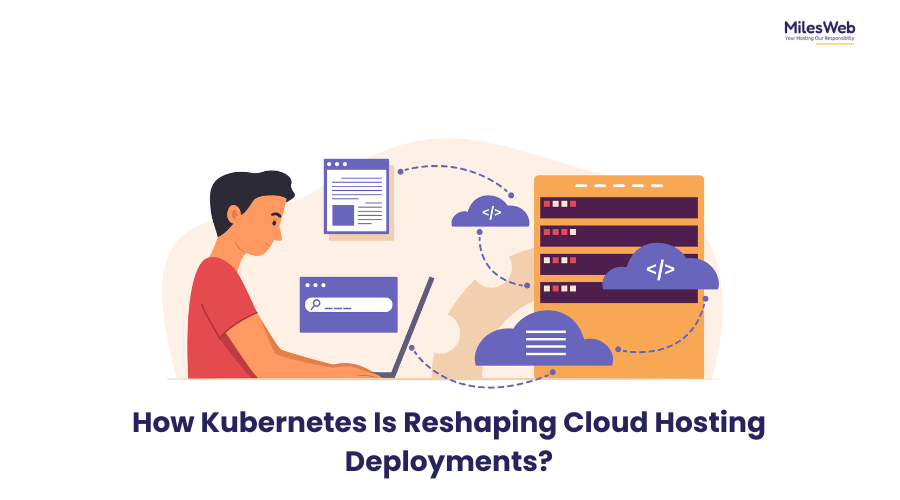
Table of Contents
A few years ago, if someone told you they’d found the cheapest cloud server or an easy-to-use cloud hosting, it was enough to get a project off the ground. You’d spin up a VPS, set up Apache or Nginx, upload your code, and call it a day. Scaling primarily involves upgrading to the next larger plan. It was simple—until it wasn’t.
Today, cPanel cloud hosting isn’t just about finding a fast, affordable server. The real challenge is how to deploy, scale, and manage applications without being overwhelmed by complexity. And that’s where Kubernetes has completely shifted the conversation.
Kubernetes in Simple Words
Let’s clear up the jargon first. Kubernetes, or ‘K8s’ as it’s commonly called, is an open-source platform that takes care of running containers for you—handling everything from deployment and scaling to day-to-day management.
Think of it as the air traffic controller for your app containers. It decides where each “plane” (container) should land (server), makes sure they have fuel (resources), and reroutes them if something goes wrong. Without Kubernetes, managing containers at scale feels like manually parking airplanes during a thunderstorm—possible, but stressful.
Why It’s a Big Deal for Hosting Deployments?
In classic cloud hosting, your application resides on one server or a cluster. Scaling up means adding more power to that setup. It's great—until you experience sudden traffic surges or must deploy updates without interruption.
Kubernetes changes the game by abstracting away the underlying infrastructure. You can run your workloads on any cloud provider, across multiple regions, or even mix on-premise servers with cloud instances. The real win? The system automatically shifts workloads, restarts failed containers, and scales resources based on demand—without waiting for you to log in and tweak settings.
From “Server-Centric” to “Workload-Centric”
Before Kubernetes, most deployments were server-centric:
- Pick a server.
- Install everything.
- Keep it running.
If the server crashed, the application didn’t stand a chance either.
Kubernetes flips this. It’s workload-centric:
- Define what your app needs to run.
- Kubernetes determines where and how to run it.
If a node (physical or virtual machine) is down, Kubernetes just moves the container elsewhere. Users never notice the hiccup.
Real-World Hosting Benefits
1. Seamless Scaling
If your online store’s Black Friday traffic jumps from 500 to 50,000 visitors, Kubernetes can automatically launch extra containers to handle the load, then scale back down afterward—saving you money on unused resources.
2. Zero-Downtime Deployments
Rolling out a new feature? Kubernetes lets you update one container at a time while keeping the old ones running until the new version is healthy.
3. Freedom from Vendor Lock-In
Since Kubernetes runs on almost any infrastructure, you’re not tied to one provider. You could start on AWS, move half your workloads to Google Cloud, and keep your database on a private server—all under one orchestration layer.
The Hosting Industry’s Shift
Hosting companies are already adjusting their offerings around Kubernetes. A few years ago, most providers were focused on adding more SSD storage or faster CPUs to their cloud VPS server hosting. Today, many are launching managed Kubernetes clusters, so customers don’t have to learn every configuration detail.
The trend is clear: as more developers build with containers, hosting services are moving from selling “space on a server” to selling “a platform that keeps your workloads healthy no matter where they run.”
Where cPanel Fits In (or Doesn’t)?
For small businesses, cPanel cloud hosting is still a lifesaver—it’s familiar, easy to use, and perfect for simple websites. However, Kubernetes sits in a different league. It’s not about managing one WordPress website; it’s about running dozens (or hundreds) of services that talk to each other, scale independently, and recover automatically.
Of course, nothing stops you from using both at the same time. Some agencies run their client-facing websites on cPanel while using Kubernetes to power backend systems like analytics, APIs, and microservices.
Challenges Nobody Likes to Mention
It’s easy to read about Kubernetes and think it’s pure magic. The truth is, it’s powerful—but it’s not plug-and-play.
- Learning Curve: Kubernetes isn’t a weekend project. Even experienced sysadmins need time to adapt.
- For small projects, Kubernetes is incredibly capable; however, the setup and upkeep can demand more time than the project really needs.
- Budget is another lookout point. Autoscaling is great, but if you don’t set limits, it can quietly add more resources — and your bill can spiral before you realize it.
That’s why many teams choose a managed Kubernetes service instead of running it themselves. Managed hosting providers like MilesWeb smartly handle the heavy lifting — setup, patches, upgrades — so you can focus on building the app.
From a hosting provider’s view, it’s about matching the stage of your business. Start with the cheapest cloud server for something small, step up to cPanel cloud hosting when you want more control, and move to managed Kubernetes when scale and uptime become critical.
By adding Kubernetes, they’re not replacing the shared or VPS hosting—they’re filling a gap for clients who’ve outgrown traditional hosting but aren’t ready to build an entire DevOps team.
The Future: Hybrid Everything
In the next few years, expect to see more hybrid approaches—mixing Kubernetes with traditional hosting. Some workloads will always be simpler to run on a VPS or cPanel account. Others will benefit from container orchestration. The winning hosting providers will be the ones who provide seamless transitions between these realities.
Closing Insights
Kubernetes has moved cloud hosting from a “where do I put my website?” question to a “how do I keep everything running everywhere?” question. For developers and businesses looking for reliability, speed, and flexibility, Kubernetes changes the game.
For hosting companies, it’s no longer just about keeping up—it’s about leading the way for the next decade of deployments. MilesWeb is already moving in this direction, giving businesses hosting that isn’t static but built to grow as their needs change.